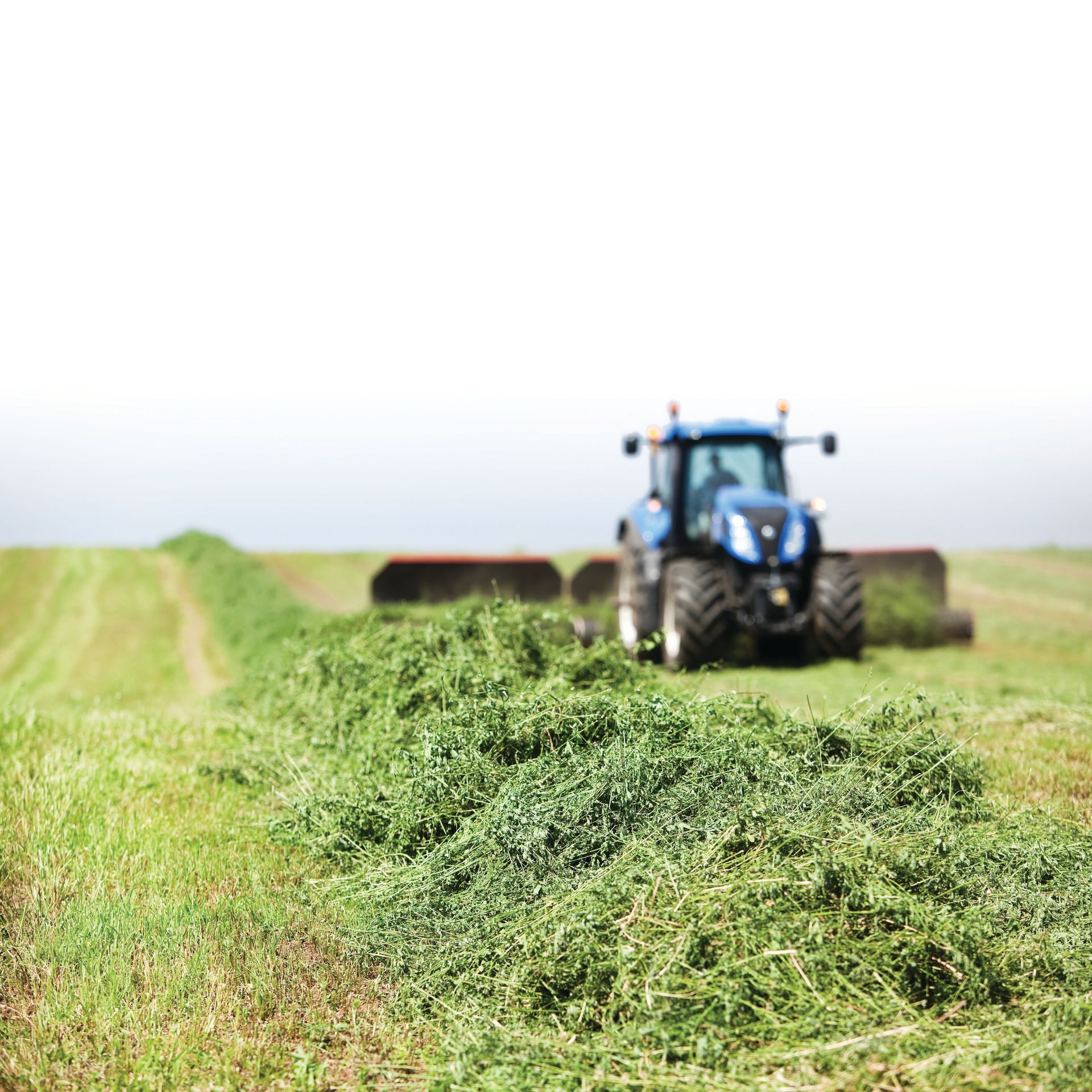

Do your hay fields and pastures need a pick-me-up?

Sugar Creek Ag • October 2, 2025

EARTHQUAKE Liquid Humic and Forage Factor 

are the products you need!

EARTHQUAKE Liquid Humic will assist with root development and condition your soils to better utilize applied nutrients and those that may be tied up in your soils. It can also assist with moisture retention and compaction issues!


Forage Factor is a balanced 8-8-8 with 6 micronutrients. Micronutrients are often overlooked when managing hay fields and pastures. Deficiencies can be “hidden hungers,” and even though you don’t see them, they can be there and be a limiting factor to the results you want! The application of Forage Factor (with Boron, Copper, Iron, Manganese, Moly, and Zinc) can make a significant difference.

Applied together, EARTHQUAKE Liquid Humic and Forage Factor are Farmer-Proven to be effective and give your hay fields and pastures the growth, density, and quality you want! Follow Sugar Creek Ag’s Facebook page for pictures and farmer feedback and testimonials.

3X Application Program 

Application to begin spring green-up through 10 days prior to first cutting


  • First application: 2 quarts of EARTHQUAKE Liquid Humic and 2 to 4 quarts of Forage Factor
  • Second application: 1 quart of EARTHQUAKE Liquid Humic and 2 to 4 quarts of Forage Factor after first cutting with 2 to 3 inches of re-growth
  • Third application: 1 quart of EARTHQUAKE Liquid Humic and 2 to 4 quarts of Forage Factor after second cutting with 2 to 3 inches of re-growth

2X Application Program 

Application to begin after first cutting through 10 days prior to second cutting


  • First application: 2 quarts of EARTHQUAKE Liquid Humic and 2 to 4 quarts of Forage Factor
  • Second application: 2 quarts of EARTHQUAKE Liquid Humic and 2 to 4 quarts of Forage Factor after second cutting with 2 to 3 inches of re-growth


1X Application Program 

Just one time, at any time, to give your crop a boost!


  • Good: 2 quarts of EARTHQUAKE Liquid Humic and 2 quarts of Forage Factor
  • Better: 3 quarts of EARTHQUAKE Liquid Humic and 3 quarts of Forage Factor
  • Best: 4 quarts of EARTHQUAKE Liquid Humic and 4 quarts of Forage Factor

All suggested rates are per acre in 10 to 20 gallons of water per acre and can be applied with most herbicides. Earthquake Liquid Humic and Forage Factor can be applied as often as desired.


Applications a grower may want to make, in addition to any of the those suggested above, would be:
1 quart of EARTHQUAKE Liquid Humic and 2 to 4 quarts of Forage Factor


Other Sugar Creek Ag foliar products that can utilized on hay fields and pastures, based on crop need, are:
BrimStone 17
(Sulfur) - DropkicK (Potash) - PaybacK (Phosphorous and Potash) and can be added at 1 to 2 quarts per acre; or split-applied with Forage Factor (example: instead of 2 quarts of Forage Factor, apply 1 quart of Forage Factor and 1 quart of BrimStone 17)


Cal-zone (plant-available Liquid Calcium, applied 3 to 5 gallons per acre)


The addition of NanoPro® to any herbicide application is suggested.

By Sugar Creek Ag February 11, 2026
Ray and Stephanie Tucker and their son Nathan farm 5000 acres in north central Kentucky, an 8th generation farm family.
By Sugar Creek Ag January 29, 2026
When it comes to grass hay and pasture production, early-season management sets the tone for the entire year. What happens at green-up influences stand density, forage response, nutrient efficiency, and ultimately how much you can get out of every acre. Building a strong forage program isn’t about chasing a single pass or product. It’s about supporting soil function, nutrient availability, and plant health from the start. If soil conditions or nutrient availability limit growth at green-up, those challenges can carry through the rest of the season and impact both yield and forage quality.  That’s why many hay and pasture growers focus on programs that support early nutrient efficiency and soil function — not fertilizer alone. In many hay and pasture systems, early fertility focuses heavily on nitrogen to drive growth. While nitrogen can increase biomass, it doesn’t always improve forage quality or feed value. Bigger plants don’t automatically mean better hay. In some cases, bulk without balance can lead to more waste and less efficient utilization.
By Sugar Creek Ag January 28, 2026
A crop may still require calcium even when soil pH is within the optimal range because soil pH alone does not indicate how much calcium is actually available to plants or how effectively it is taken up. While pH reflects soil acidity or alkalinity, it does not measure exchangeable calcium levels.
Show More